Went shopping with my father today. Nothing fancy. We needed a few basics, so we stopped by one of those big discount stores.
We always end up talking about clothes, even if that’s not what we came for.
I usually check for decent brands on sale. Not designer stuff, just things that last — good fit, good fabric. I keep them for years. Some shirts I’ve had since college. They get softer, more familiar. I feel weird throwing them out, even when they’re on their last leg.
My dad’s the total opposite. He heads straight for the multipack tees or whatever’s on the rack — same color, same style, same size. He doesn’t even try them on. Just grabs five or six, no hesitation.
“Don’t you feel weird tossing stuff out so fast?” I asked him today.
He gave this half-shrug, like it didn’t even require thought. “It’s just stuff. You wear it, and when it’s done, it’s done.”
That line stuck with me. Because for me, it’s not just stuff.
I look at a jacket and remember when I wore it on my first day at work. A hoodie reminds me of the road trip with my friends. A shirt that’s gone thin at the elbows — I wore that on the day I moved into my first apartment.
It’s not like I’m sentimental all the time, but I attach memories to things without meaning to. I hang onto them, patch them, fold them away like I might need to remember something.
Meanwhile, my dad? He travels light. No fuss. No clutter.
There’s something kind of admirable about that. Like he’s not weighed down by objects, or nostalgia. He doesn’t waste time debating which T-shirt to keep. He just replaces, moves on.
I think we just operate on different rhythms. He moves through life by function. I move through it by memory.
Neither is better. But today, standing in that aisle — me checking care labels, him tossing shirts into the cart — it hit me how far apart our habits are.
And how quietly those habits say something about who we are.
We didn’t talk much after that. Drove home with the windows cracked, radio low.
But I keep thinking about that shrug. “It’s just stuff.”
Maybe it is. Maybe that’s why I keep so much of it around.
John Berger was never just a critic. He was a storyteller, an essayist, a drawer of connections between the visible and the invisible. In And Our Faces, My Heart, Brief as Photos—a slim, hybrid work first published in 1984—he dismantles the neat boundaries between art criticism, personal memory, poetry, and philosophy.
I first encountered this book during my master’s studies in cultural anthropology, where Berger’s work was treated not only as literature, but as methodology—a way of seeing and thinking about lives. Reading it again now, the book feels startlingly contemporary, even necessary.
In a world saturated by images and half-told stories, Berger reminds us not only how to look, but why it matters. For those of us engaged in the work of preserving life stories—be it through memoirs, interviews, or everyday remembrance—this book is a quiet manifesto.
I. Seeing as an Act of Love
From the first page, Berger sets up a tension between absence and presence, loss and longing. “To look is an act of choice,” he writes in Ways of Seeing, and Faces extends that insight into the realm of memory. To look at a face, a landscape, a photograph—even briefly—is to engage in a moment of affection, even if that moment is fleeting or fraught.
What Berger does masterfully is connect the visual to the emotional. He does not just ask what we see, but what we miss when something disappears. In this way, looking becomes mourning, and remembering becomes a form of devotion.
Berger’s sensibility often reminds me of Mark Rothko’s paintings—those blurred edges, suspended forms, fields of color that seem to weep without a face. Like Rothko, Berger’s work does not shout, but it lingers. It feels its way into the room. To behold is to ache, both artists seem to say.
For families struggling to understand the people they’ve lost—or are losing—this offers something profound. Berger teaches that the practice of noticing is itself a form of love. This perspective, in turn, echoes Erich Fromm’s definition of love—not as a fleeting feeling, but as an ongoing act of care, attention, and responsibility.
II. The Body as Archive
Berger returns often to the idea that memory is not just a mental exercise. It is embodied. We carry our pasts in our gestures, in how we sit, how we carry bags, how we turn our faces.
“The memory of the body is stronger than that of the mind,” he writes.
This connects beautifully to what we now understand through neuroscience: that memory is deeply connected to sensation—smells, touches, sounds. Berger intuited this decades ago. He doesn’t just describe a past moment; he inhabits it, and asks us to do the same.
For those trying to reconstruct the lives of their parents or grandparents, this insight is invaluable. Look not only at their words, he says, but at their postures, their rituals, their silences. The body remembers.
III. Time and Fragmentation
There is no linear narrative in Faces. Berger doesn’t believe in biography as chronology. Instead, the book is structured in fragments: prose sections interspersed with short poems, recollections broken up by aphorisms or philosophical insights. This can be disorienting at first. But then you realize: this is how memory actually works.
Time in this book folds in on itself. A lover long gone appears in a sentence as suddenly as a remembered painting. There are no clean beginnings or endings—just returns.
“Every city has a sex and an age which has nothing to do with demography,” he writes. So, too, every memory has a season, a mood, a weather of its own.
For anyone documenting a life story, Berger’s structure is an important reminder: people do not remember linearly. They remember in constellations.
IV. Language and Loss
One of the most poetic threads in the book is Berger’s meditation on language—particularly in exile. Having lived much of his life in rural France, away from his native England, he reflects on how language can become foreign even when it’s yours.
This is especially poignant for anyone who has migrated, or aged into silence, or simply felt their own vocabulary grow strange. Berger’s prose often slips into the language of longing—for a homeland, for a lover, for clarity.
For adult children trying to piece together a parent’s life—especially across cultures—this theme resonates. Berger seems to whisper: they may not have said everything, but they left clues. In silences. In syntax. In the words they couldn’t quite find.
V. Photography and the Presence of Absence
Throughout Faces, Berger writes about photographs—not just as objects, but as vessels of presence and absence. A photograph captures a moment that no longer exists. And yet, the image persists.
“What makes a photograph profound,” he suggests, “is not only what it shows, but what we know has disappeared.”
This is not merely poetic—it is practical. When working with family archives, photographs can feel like puzzles with missing pieces. Who is that person? What day was this taken? Why are they smiling?
Berger’s approach invites us to treat photos not as evidence, but as invitation—to imagine, to speculate, to feel.
VI. Love, Separation, and the Ordinary
One of the most tender themes in Faces is separation. Berger writes about lovers parted by time, by war, by choice. But the book’s most aching moments are about everyday separations—those caused by the drift of years, misunderstandings, or simply growing older.
There’s a section where he writes about waiting for someone who will never arrive. And yet, the book never dips into sentimentality. Berger’s gift is to treat the ordinary—waiting for a train, chopping wood, drying dishes—as sites of philosophical revelation.
For us at StoryTable, this is key. So often, people think their lives aren’t “interesting enough” to preserve. Berger dismantles that. Every life, he insists, is a web of meaning.
VII. A New Kind of Biography
In this book, biography is not about summary. It’s not about achievements or clean timelines. It’s about presence. About holding contradictions.
“To bear witness is not a passive act,” Berger says. It’s participatory.
Faces isn’t just about one man’s thoughts—it’s a blueprint for how we might begin to truly see one another. And in this way, it becomes an argument not only for remembering, but for preserving.
Final Reflection: What Berger Offers Us Now
In the years since its publication, And Our Faces, My Heart, Brief as Photos has become a quiet classic. Not a bestseller. Not a pop sensation. But a book that is passed from hand to hand when someone loses a parent. Or when someone tries to write their memoir. Or when someone needs to remember how to look.
It’s not a book that explains how to tell stories. It is itself a story: broken, beautiful, unfinished.
In our work documenting lives—especially those of elders—Berger reminds us that we are not just collecting facts. We are holding space. For contradiction. For forgetting. For love.
To tell someone’s story is to risk seeing them fully. It is to say: your face, your voice, your way of being in the world—brief as it was—mattered.
I didn’t grow up thinking life stories needed to be written down. They lived in fragments — in things people remembered at family dinners, in objects kept in drawers, in the way someone’s voice echoes even after they’re gone.
But lately, I’ve been rethinking that.
It’s not just about nostalgia. It’s about loneliness. And about what gets left unsaid.
When Writing Becomes Remembering
Years ago, while working on my cultural anthropology thesis, I spent time with Korean white-collar retirees — men who had risen through banks and government offices in the decades following war and upheaval. They weren’t celebrities. They didn’t lead revolutions. But their lives were full of movement — from villages to cities, from typewriters to meetings, from youth to responsibility.
What I remember most was how quiet they were. How often they paused when asked simple questions like, “What did you want, back then?”
Sometimes they couldn’t answer. Other times they tried — slowly, carefully. And occasionally, writing helped them get there.
Getting Older Is Getting Used to Silence
As people age, something shifts. Not just physically, but socially.
The family grows busy with its own life. The workplace disappears. Friend groups shrink.
We become more alone — even before we’re truly alone. And in that quiet, memories gather like dust. Unshared, unasked, unread.
It’s not about being forgotten. It’s about being misunderstood.
Your child doesn’t know why you made that decision in your 30s. Your spouse might not fully understand what you lost in your 40s. Even you might need help remembering what mattered most.
Writing a life story can feel like an excuse — not in the apologetic sense, but in the explanatory one. A way of saying: This is why I chose what I did. This is what it meant to me.
My Father, and the Others Like Him
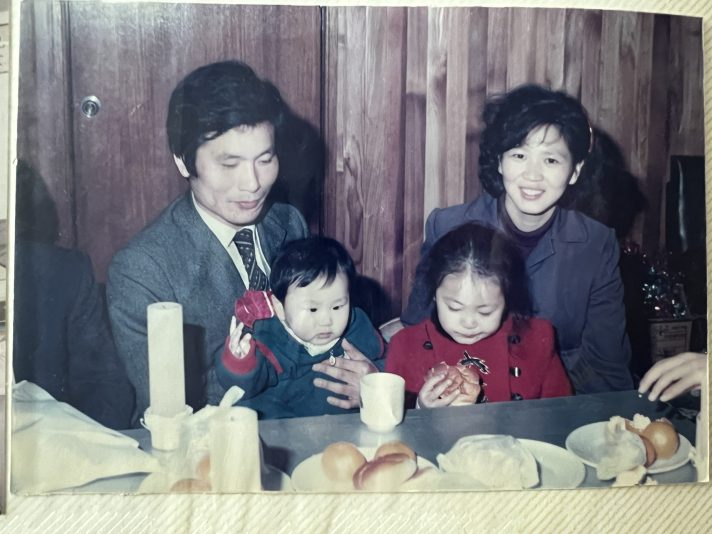
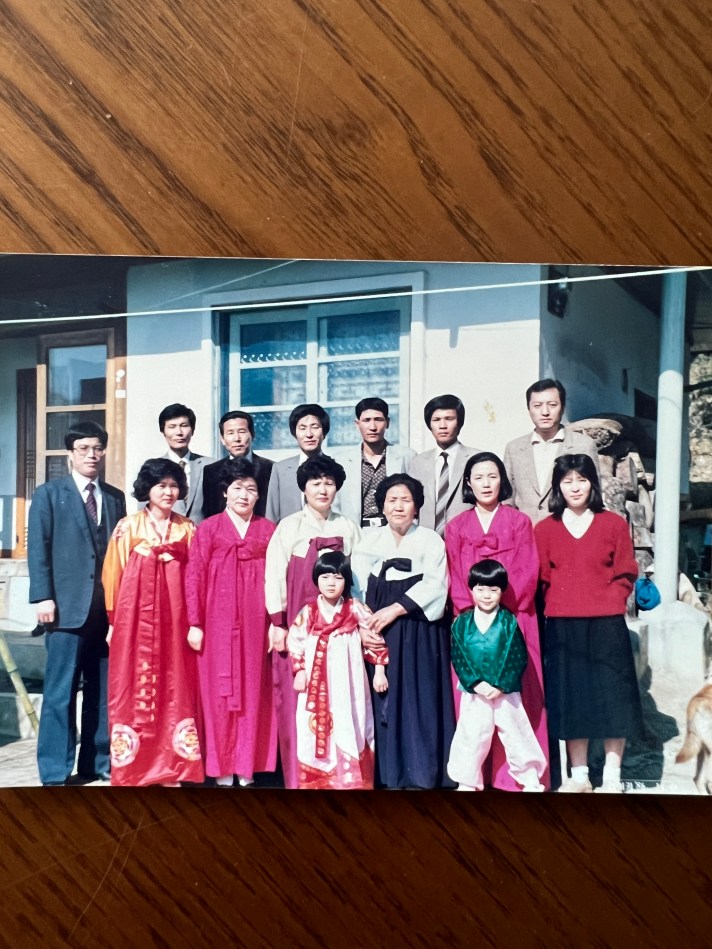
My own father was born in the early 1950s in the Korean countryside. He moved to Seoul for a job, started as a bank teller, worked quietly, and eventually retired as a branch manager.
At work, his coworkers respected him — he was flexible, reliable, generous. At home, he was stricter, more distant. I now wonder if he felt lonely there. Maybe it was hard to explain his inner world to us. Or maybe he didn’t know how.
He was the eldest of eight siblings, raised with responsibility etched into his habits. Duty, not expression. Provision, not explanation.
So much of him — like the men I interviewed — remained unsaid. But I now see: it wasn’t because there was nothing to say. It was because no one asked. And maybe, he didn’t know how to start.
Science Has a Name for This
Psychologists call it narrative identity — the idea that we make sense of ourselves through story. Writing, especially in later life, helps reduce stress, increase emotional clarity, and even alleviate feelings of isolation.
Sociologists frame it as a bridge across generations. Anthropologists like myself see it as cultural memory — a form of preservation that can outlive the speaker.
When someone writes their life story, they’re not just sharing facts. They’re building a path for others to walk through their mind and time.
Family Is the Closest, Yet Sometimes the Least Understood
We think we know our parents. Or our grandparents. But we know them mostly through roles — not reflections.
Writing a life story gives the family something rare: A chance to understand. Even when the person is no longer around. Even when distance, death, or silence have stepped in.
It’s not about legacy in the traditional sense. It’s about repairing the unseen misunderstandings that time has layered into relationships.
When someone writes down what they felt — not just what they did — we begin to know them as people. And that knowledge softens things. Even the difficult parts.
A Gentle Invitation
You don’t have to be a writer. You don’t need perfect grammar. But you have a life no one else has lived. And someone — maybe even your future self — needs to hear it.
I believe this not just as a son, but as a researcher. Not just as a Korean, but as someone trying to make sense of what connects people across time.
We’re made of more than events. We’re made of meaning.
Writing your story might be the most generous thing you do — for yourself, for your family, and for the quiet places inside you that are still waiting to speak.
He was born in the early 1950s, in a countryside village where winters were long and electricity arrived late. His earliest memories, I imagine, were of rice fields and the way steam rose from his mother’s morning soup. He didn’t talk much about those days — only that the mountains were close and the neighbors, closer.
He was the first-born of seven children. That role shaped him early — not just in name, but in posture, in restraint. He learned to wait. He learned to give up his share without being asked. Quiet responsibility became second nature. It was the kind of discipline that didn’t draw attention — only respect.
In his twenties, he passed the civil service exam and moved to Seoul for a job at the bank. He started as a teller — meticulous, polite, steady. Seoul in the 1970s was a city in motion, and he moved through it like a man with a plan and no time to waste. His suit was modest. His apartment small. His gestures always measured.
He stayed with the bank his entire life. He rose steadily through the ranks — eventually working at the headquarters, then returning to branch life as a manager. Not the loud kind. He was, as one junior teller once described to me, “the kind of boss who knew every team member’s family situation, but never brought his own into conversation. Always covered someone’s mistake before it became a problem. Always stayed late — but never made you feel bad for leaving on time.”
His colleagues liked him — deeply. They joked around him easily, spoke up during meetings, felt protected under his quiet leadership. He was the one they called when something sensitive needed handling. The flexible one. The dependable one.
But at home, he was different.
He arrived at the dinner table on time, but often silent. He never raised his voice, yet there was a tightness to his approval. We felt his expectations more than his encouragement. He would remind us to turn off lights, to study harder, to keep things in order — but rarely asked us how our day went. My mother sometimes muttered, “He’s warm to everyone but his own family,” not out of anger, but out of knowing.
As a child, I resented that. I didn’t understand how the man who brought pastries for coworkers’ birthdays could forget mine. Or how he could be so generous with strangers, but so measured at home. But with time, I’ve come to see it differently. I think he was lonely in ways he never named. He didn’t know how to relax inside the walls he paid for. He carried so much responsibility that he forgot how to share the weight of it.
Still, his care was present — just structured. He never missed a utility bill. He renewed insurance before it expired. He filed receipts in neat envelopes by month and marked family events on the wall calendar, even if he didn’t say anything about them.
And he never missed work. Even during typhoons. Even when he was sick. Reliability was his way of showing up — and it shaped how I move through the world, whether I like it or not.
After he retired, I visited his old branch. A younger employee recognized my name. “Your father was different,” he said. “Strict when it mattered, but never unfair. He always defended us. We knew we could count on him.”
That’s when I realized something I hadn’t been able to see before: at work, he had space to be who he wanted to be — composed, respected, gently humorous. At home, he was weighed down by things we couldn’t understand, and maybe he didn’t know how to explain. His silence wasn’t distance. It was containment.
Now that I’m older, I find myself doing the same — holding things in, managing without complaint, offering stability without asking for anything back. Sometimes I wonder if I inherited his silence more than his surname.
But I also inherited his steadiness. And perhaps that was his way of loving us: not loudly, not always clearly, but constantly.
He never said he was tired. But he carried us — and everything else — like a man who couldn’t afford to drop anything.
I didn’t always notice it when it happened. But over time, I started to recognize the pause that followed when my mother told a story from her past. She would say something about her childhood, or a moment from her early years in Seoul, and then there would be this silence. It wasn’t dramatic or emotional. It just sat there. And I’d sit with it too, not entirely sure if I was supposed to say something or just leave it alone.
One time, she told me about the first winter her family spent in a new apartment. The heater had broken, and there weren’t enough blankets. She and her sisters slept side by side, tightly packed together. The way she told it, it wasn’t a complaint — just a fact. She finished the story without any kind of wrap-up, no final sentence to tie it together. And then she went quiet.
At first, I thought that meant she was done talking. Now I understand it a little differently. That silence isn’t the end of the story. It’s part of it.
My mother was born in the early 1950s, just after the Korean War. She grew up in a time when the country was rebuilding from nothing. Hunger wasn’t a concept — it was a constant. Education was a privilege, not a given. For women especially, life was often dictated by obligation more than choice. Knowing that now, her stories make a different kind of sense. The tone. The sparseness. The way she seems to hand them over with little emotion, as if they aren’t unique but typical of anyone who survived that time.
I didn’t grow up asking my parents many questions about their past. Like a lot of children of immigrants, I picked up the basics through fragments — food, habits, the occasional mention of a relative or event. But the deeper stories, the ones that reveal how someone saw the world, were rarely told. I think there was a quiet agreement between us that the past was too far away, or too complicated to explain. Maybe they assumed I wouldn’t understand. Maybe they were right.
But something shifted for me in my thirties. I started to feel more curious, not in a formal way, but in a quiet way. I found myself wanting to know what my parents had been like before they were parents. Not just what they had done, but what they had hoped for, what they had missed, who they had loved and lost along the way.
So I started listening more closely. I didn’t sit them down with questions or a voice recorder. I just paid attention. Stories would slip out during dinner, or while watching TV, or when they were half-talking to themselves. And once in a while, they would say something that surprised me.
My mother once mentioned her younger sister in passing. I had never heard much about her. She said they had argued the night before her sister was killed in an accident. Something about a scarf. She didn’t go into detail. Just said, “We didn’t talk the next morning.” That was it.
I didn’t know what to say, so I didn’t say anything. It wasn’t silence out of discomfort. It was silence out of respect — like the story had taken up space, and there was nothing to do but sit with it.
These moments kept happening. A detail about a childhood illness. A passing remark about a teacher who was kind. A mention of a friend she lost touch with. I started to see my mother not as a fixed figure in my life, but as someone who had lived many versions of herself before I ever arrived. Each story added another thread to that version.
I used to think that stories were always meant to be shared out loud and responded to. That they needed acknowledgment, or validation, or some kind of moral takeaway. But my mother’s stories didn’t work that way. She didn’t need me to react. She just needed to say them once, sometimes without looking up, and then leave them there.
I’ve come to believe that the silence after a story is a kind of punctuation. Not a period, exactly — more like an em-dash, or a soft return. It’s the moment where you decide whether to ask a follow-up question, or whether to let the story breathe on its own. Often, I let it breathe. Some stories don’t need commentary. They’re already carrying enough.
Over the last year, my mother has told me fewer stories. It’s not that she’s forgotten them. I think it’s more that she’s already told me what she needed to say. Or maybe I’ve learned how to listen without her having to speak.
There are days when we sit in the same room and barely talk. I used to think that meant something was wrong. Now I don’t mind it. Some of the most honest moments between us happen without words.
I still think about those silences. The ones that followed her stories. They weren’t empty. They were full of something I can’t quite name. Not regret. Not sadness. Just the weight of something real.





 Story Table